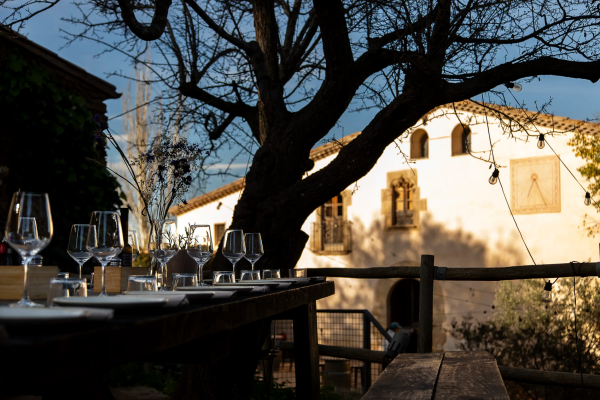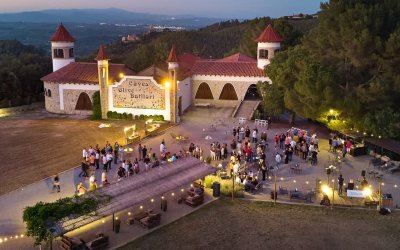
On the north side of the Collserola mountains, just a few kilometres from the city centre, Can Calopa de Dalt is much more than farmland. This historic site has become an inspiring example of how restoring rural heritage, organic farming and social inclusion can have a real impact on the local area.
A social agriculture project
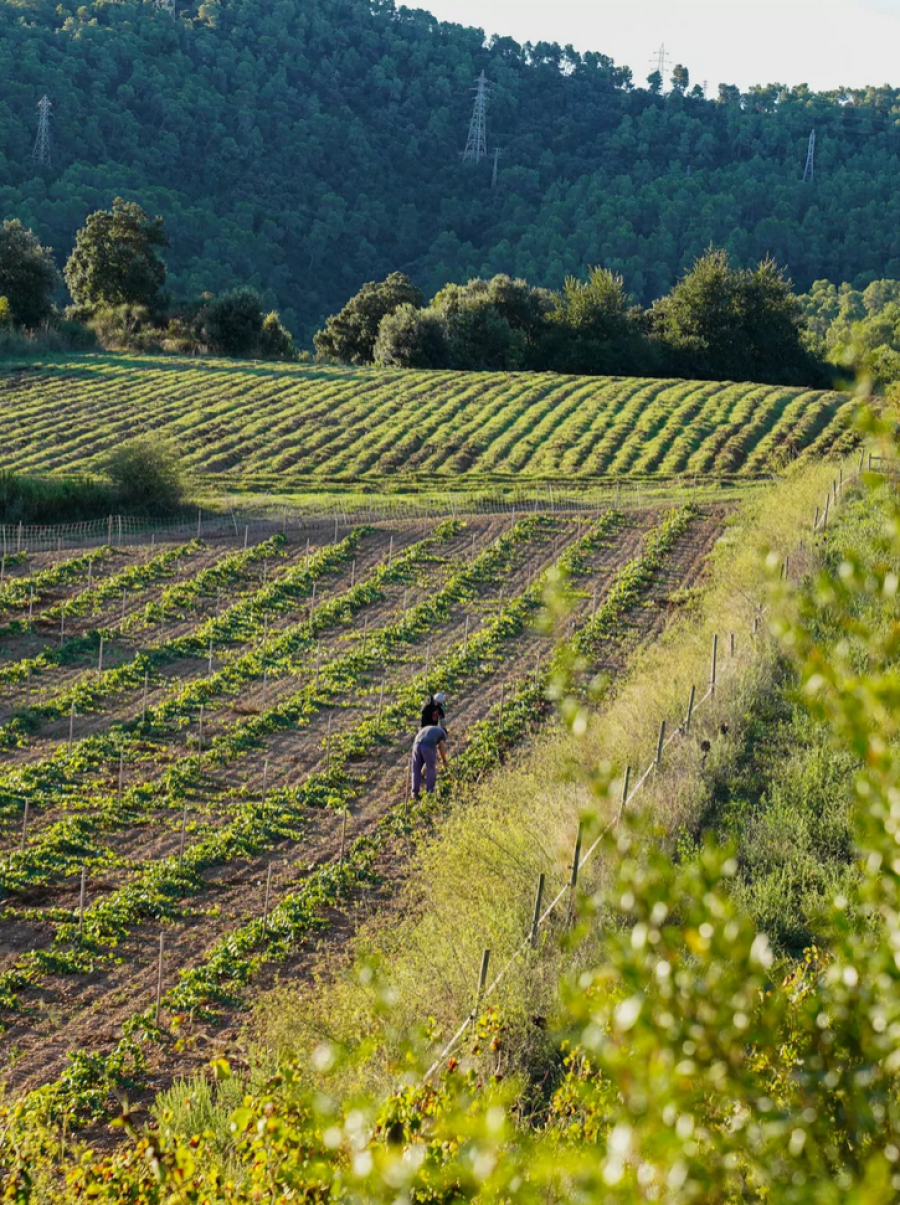
Can Calopa’s recent history began with a desire to revive Barcelona’s winemaking culture. Since 2010, the L’Olivera cooperative has been in charge of managing this municipal property’s vineyard in line with a model that combines business activity, social engagement and respect for the local region.
Reviving this tradition in a periurban environment surrounded by Mediterranean forest, a stone’s throw from built-up areas, is an exercise in resilience and a firm commitment to keeping Collserola’s agricultural landscapes alive.
Social values are the heart of this cooperative’s production model, involving people with differing abilities and those at risk of social exclusion at all stages of the agricultural and production process. The result is a human-scale agriculture project that prioritises people and reflects the area through its products. A good example is Vinyes de Barcelona, the only wine made in the city.
Wine tourism and environmental awareness
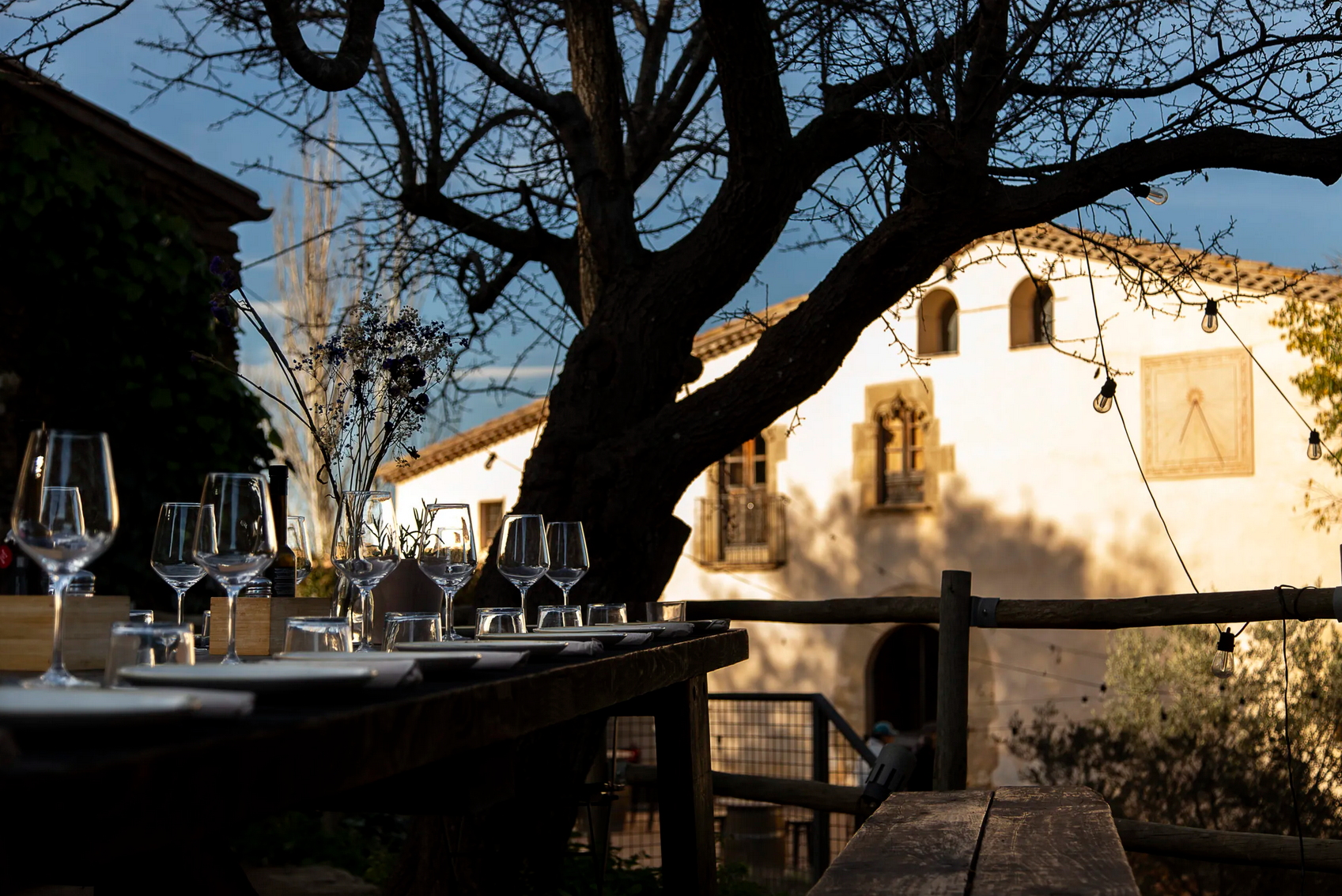
Can Calopa also offers wine tourism experiences that invite participants to discover Barcelona’s urban vineyard first hand. Through guided tours around the estate, visitors can stroll among the vines, discover the farmhouse’s history and learn about the process of making wines and oils, as well as hear about the social project behind it all.
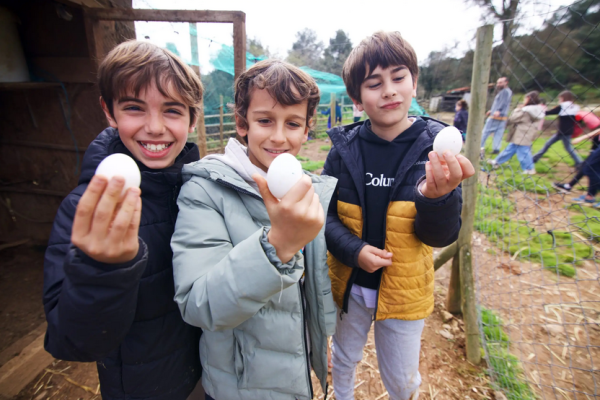
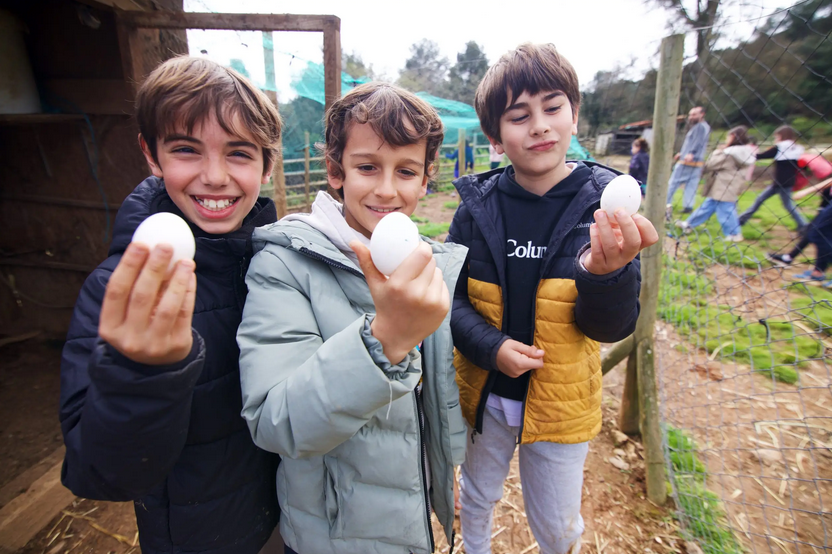
Meanwhile, educational initiatives such as the Can Calopa Classroom for school groups encourage pupils to act, think and feel in harmony with the local environment, and to become critical, active and creative participants in the diverse society around them.
Can Calopa is part of the Destination Barcelona Commitment to Tourism Sustainability and a leader in its field, with dozens of certified best practices. Its experiences bring together food, culture and the local area, showing how wine tourism can become a tool for learning about farmland, the value of local production, social inclusion and sustainability.
A model for cities of the future
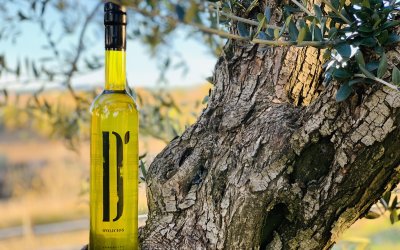
Can Calopa shows that major cities can also preserve and revitalise agricultural spaces. Bringing vineyards back to Collserola means much more than producing wines and oils: it is about preserving landscapes, creating social inclusion opportunities and reconnecting city residents with the origins of their food.
At a time when tourists are looking for more sustainable experiences with roots in the local area, initiatives like this show that the projects of the future must combine environmental sustainability, social value and cultural authenticity. Can Calopa is undoubtedly a prime example of this approach.
Find out more at olivera.org