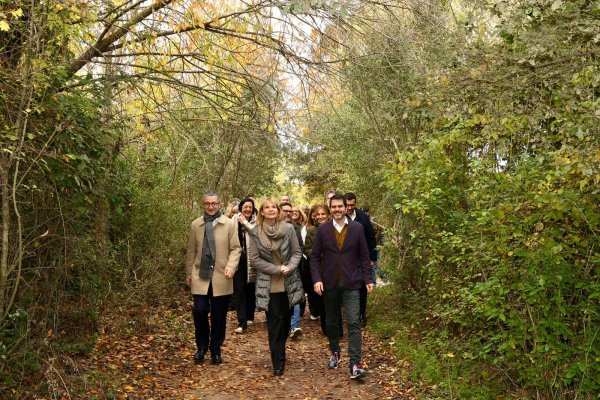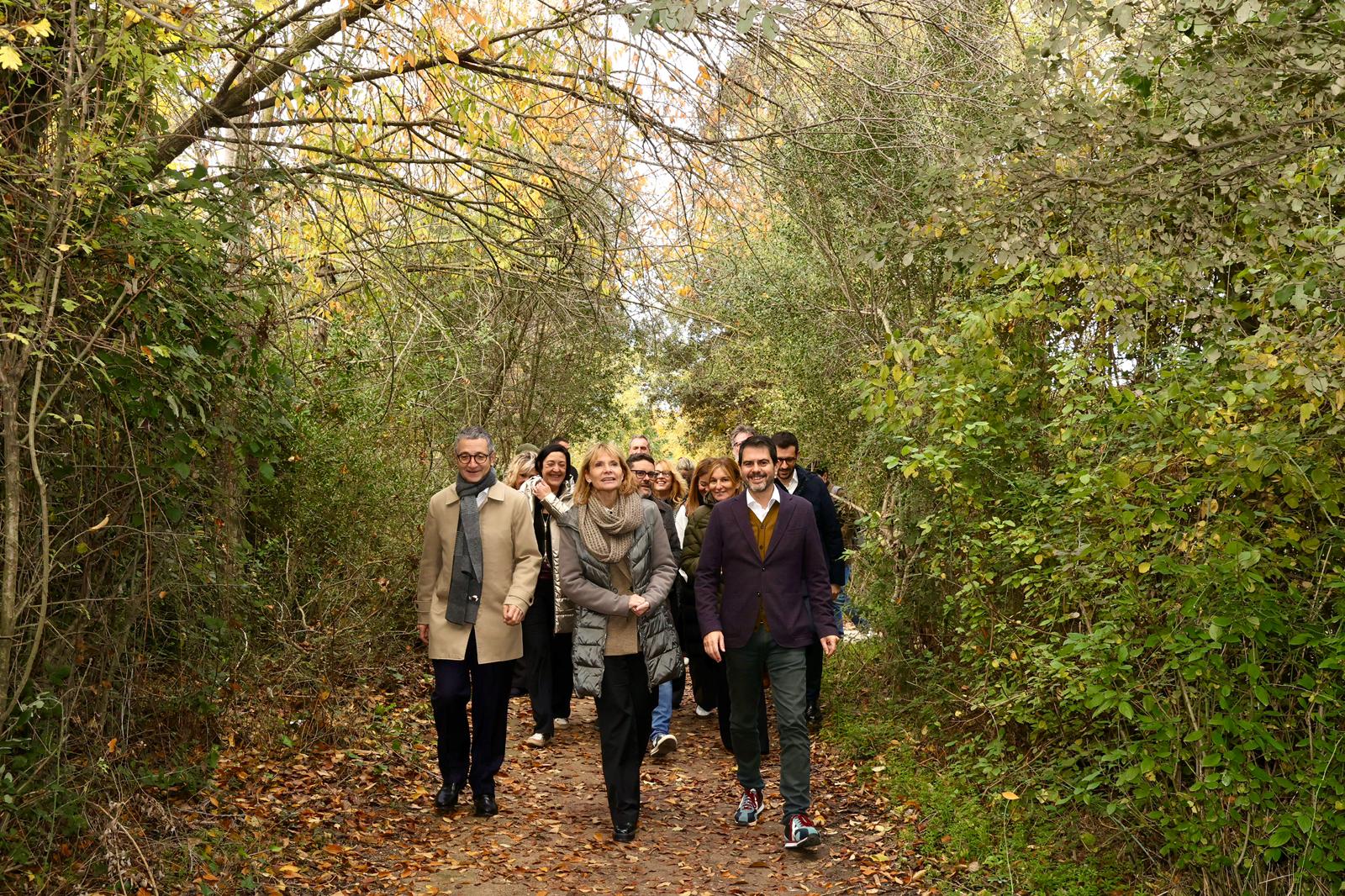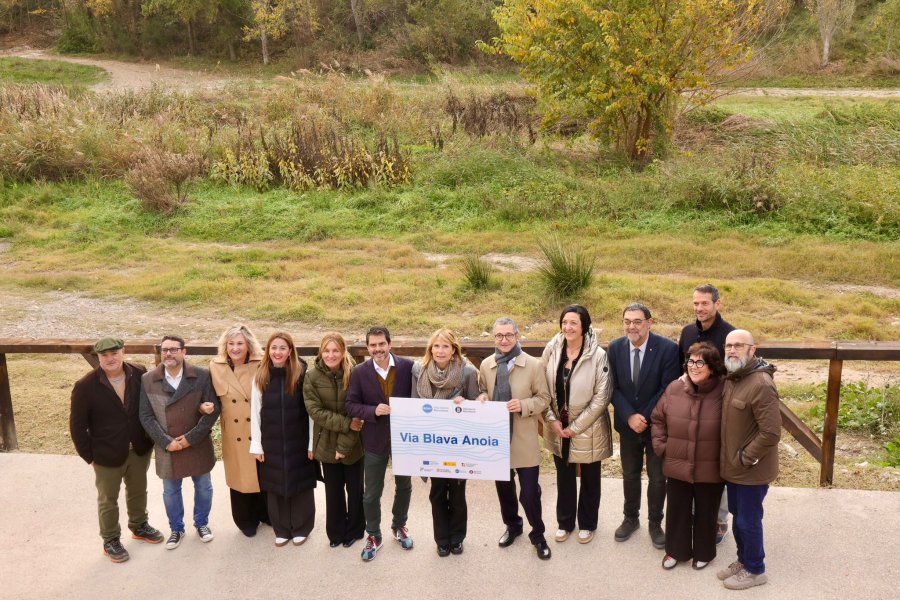
The Via Blava Anoia will link more than 250 kilometres of riverbeds across the province of Barcelona, becoming a new strategic route for sustainable tourism, active leisure and the promotion of the region’s natural and cultural heritage. The first section, spanning 19 kilometres, is already open and connects Jorba, Santa Margarida de Montbui, Igualada, Vilanova del Camí and La Pobla de Claramunt, following the course of the Anoia River.
The opening ceremony, held on 18 November, was attended by the president of Barcelona Provincial Council, Lluïsa Moret, who described the project as “transcendental and transformative for the local area, as it will help us to gradually reclaim our rivers so that we can enjoy and celebrate them”. Once completed, the route will make it possible to cover more than 250 kilometres on foot or by bicycle along the Llobregat riverbed and the tributaries of the Anoia and Cardener rivers, passing through 48 towns and cities and seven counties, with a catchment area of more than five million people.
Moret explained that the Via Blava will offer visitors a rich mix of cultural, natural, sporting and tourism experiences, with routes that are accessible and economically and socially sustainable.
The event was also attended by the provincial councillor for Economic Development and Tourism, Ana Maria Martínez; the provincial councillor for Tourism, Ana Herrera Bordallo; the Government of Catalonia’s secretary general for Territory, Housing and Ecological Transition, Jordi Terrades; and the provincial councillor for Infrastructure, Facilities and Architectural Heritage, fourth vice-president of Barcelona Provincial Council, president of the Òdena Basin Commonwealth and mayor of Igualada, Marc Castells. Castells expressed his enthusiasm about the project as it prepares to launch the second phase. “When things are truly worthwhile, they eventually become a reality,” he said. Phase two will begin in Martorell and will ultimately connect with the end of the first section in La Torre de Claramunt. The route will pass through towns and cities including Capellades, Vallbona d’Anoia, Cabrera d’Anoia, Piera, Sant Sadurní d’Anoia, Subirats, Gelida, Sant Esteve Sesrovires, Castellví de Rosanes and Martorell.
Sustainable and accessible tourism all year round
The opening of the first section of the Via Blava Anoia also forms part of the creation of a new tourism product aimed at revitalising the local area, creating economic opportunities and fostering entrepreneurship, always from a perspective of sustainability and responsibility towards the area, and involving local stakeholders through public–private collaboration.
The objective is to establish the Via Blava routes as a sustainable, accessible, unique, year-round tourism attraction in the province of Barcelona, suitable for a wide range of audiences, including hikers, cyclists, families, seniors and schools. This will help spread out tourism more evenly throughout the year and throughout Catalonia.
An area rich in attractions
In addition to the scenic value of the route itself, the surroundings of the first section offer a wide range of tourist and cultural attractions, including the Castle of Claramunt, the Castle of Jorba, the Igualada Leather Museum, the Capellades Paper Mill Museum, the Molí de la Boixera mill and the Mare de Déu de la Sala chapel.
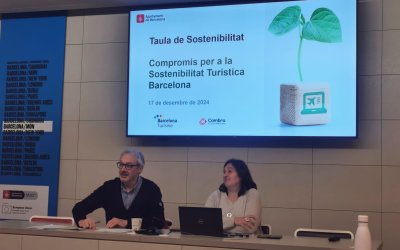
The area also boasts around forty tourist accommodation establishments, more than sixty restaurants and service providers such as bicycle hire and guided tour companies, helping to round out the visitor experience and encourage longer, higher-quality stays. Many of these businesses and organisations, as well as the Anoia Regional Council, have signed on to the Destination Barcelona Commitment to Sustainable Tourism, demonstrating the area’s ongoing efforts to move towards a more responsible tourism model aligned with environmental conservation, local development and the continuous improvement of the visitor experience.