Christmas has an undeniably magical air. It brings an irresistible urge to go out, wander around and breathe in the festive atmosphere that a city like Barcelona offers both residents and visitors. And these plans are all the more enticing because they combine history, culture and the most authentic spirit of the season. Let’s pick a spot at random on the city map: let’s place ourselves in the area around Barcelona Cathedral.
This Gothic-style building and its surroundings are not only a focal point of urban life, but also a true stage where Catalan tradition unfolds in all its splendour.
Barcelona Cathedral: more than a church
The Cathedral of the Holy Cross and Saint Eulalia is an architectural gem of Catalan Gothic. Visiting it is always worthwhile at any time of year due to its immense heritage value, but during the Christmas period it shines even more brightly.
In its spectacular chapels, visitors can admire its imposing architecture, the charming Cloister of the Geese, and the solemn tomb of Saint Eulalia, co-patron saint of the city. But come December, the building becomes the central point of several popular celebrations that fill it with life.
Two of these hold particular weight in the festive Christmas programme: the Song of the Sibyl and the Great Concert of the Orfeó Català.
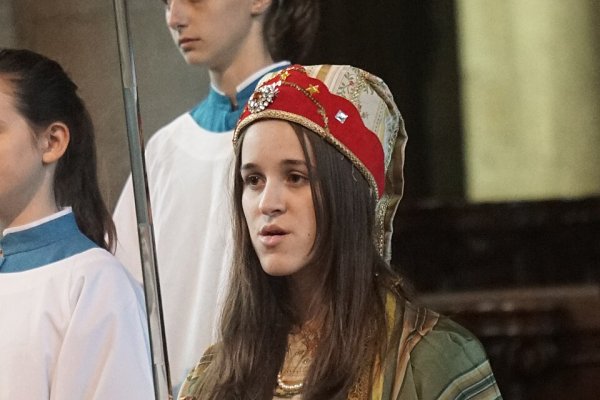
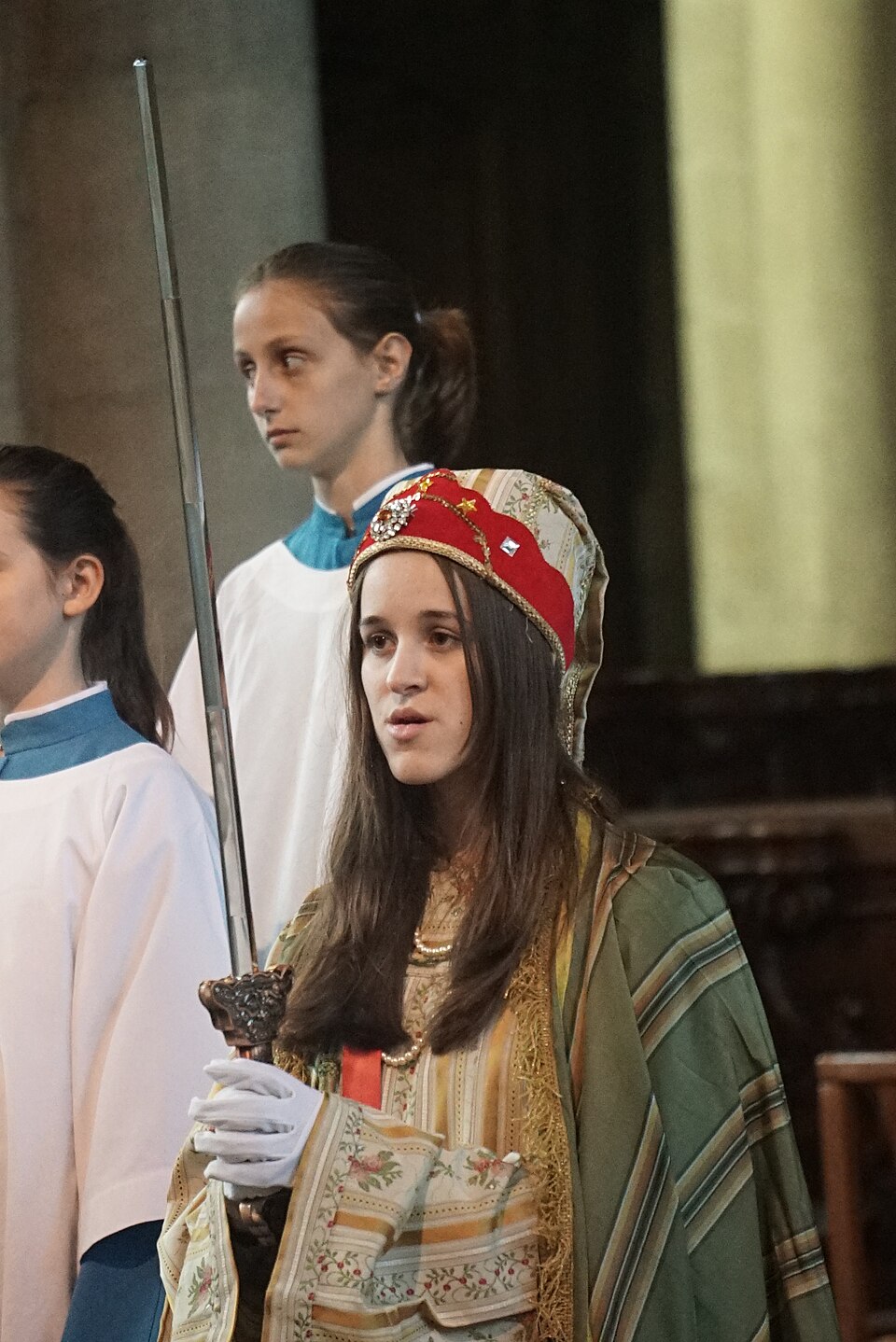
Listening to the Song of the Sibyl is a truly holistic experience: a cultural and traditional performance deeply rooted in local heritage, held on the night of 24 December at half past ten, just before the traditional Midnight Mass. Declared Intangible Cultural Heritage of Humanity by UNESCO in 2010, this medieval liturgical drama is performed inside the cathedral. Around the 16th century, it stopped being performed because it was considered a pagan ritual, except in Mallorca, where it was never lost. It is a prophetic chant which, thanks to its solemnity and the cathedral’s acoustics, creates a truly striking and unique atmosphere. Its revival, first in the 19th century and later reinforced by the UNESCO designation, is a clear example of cultural survival. Proof of this is that it can now be heard in more and more places across the city and throughout Catalonia.
Another highlight of the season is the traditional Christmas Concert performed by the Orfeó Català choir on 29 December, free of charge, in the Pla de la Seu. Hearing the choir’s voices resonating beneath the winter sky, with the cathedral as a majestic backdrop, is also a cathartic experience. It is a hugely popular, emotional event that brings the public together around the most popular Christmas carols.
The Santa Llúcia Fair: tradition and sustainability
In front of the cathedral stands one of Barcelona’s true Christmas attractions: the Santa Llúcia Fair.
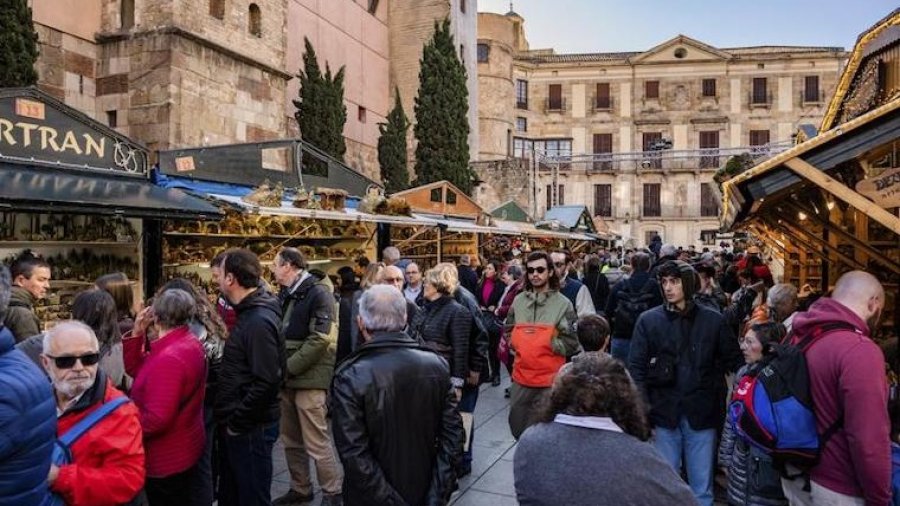
From late November until Christmas Eve, the Pla de la Seu transforms into a bustling market with more than 200 stalls. It is the oldest Christmas fair in Barcelona (documented since 1786) and the ideal place to look for nativity figures (with the Tió and the Caganer as undeniable stars), natural Christmas trees, crafts and all sorts of items to decorate the home.
Apart from its beauty and traditional character, the Santa Llúcia Fair also carries an important sustainability aspect. Buying figures and decorations here is a way of practising local, “zero-kilometre” consumption, as shoppers support small local artisans and businesses instead of mass-produced goods. This helps the fair’s model endure over time and reduces the carbon footprint associated with transporting merchandise. Experiencing this tradition is also a way of consuming responsibly.
Experiencing Christmas in Barcelona means letting yourself get lost in the narrow, busy streets of the Gothic Quarter, blending into the crowds at Santa Llúcia, listening to (and singing) Christmas music performed by the Orfeó Català, and feeling moved by the Song of the Sibyl. Magic, heritage and history, right in the heart of the city.